A self-hosted IT system of record built specifically for air-gapped, classified, and controlled operational environments with zero external telemetry or cloud dependencies. No per-seat license restrictions. Clean, patched, up-to-date containers.
No need to guess which one of 600 overlapping menus let you see and edit pending changes:
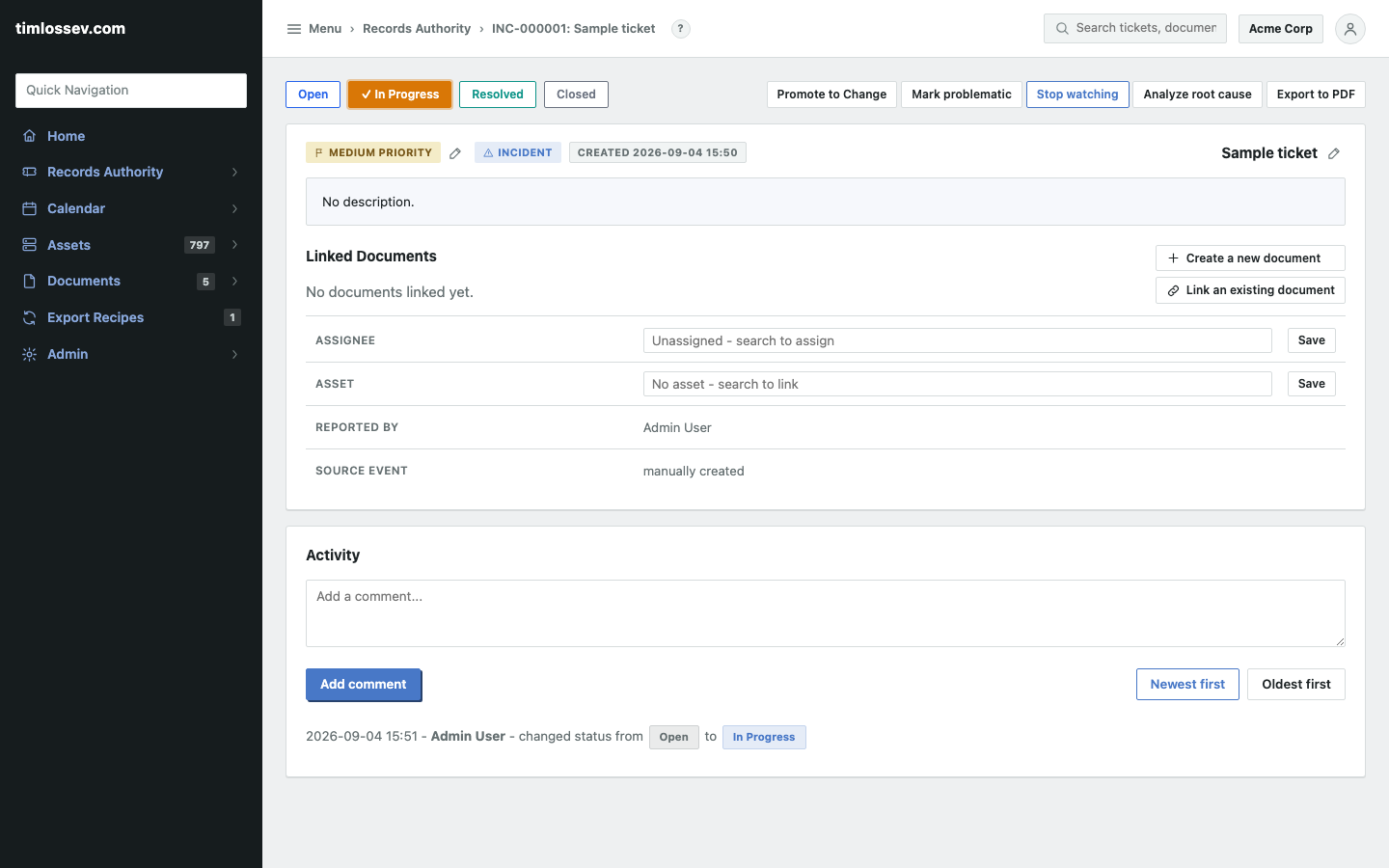
Granular tracking of operational incidents, change requests, and automated event logs.
View image
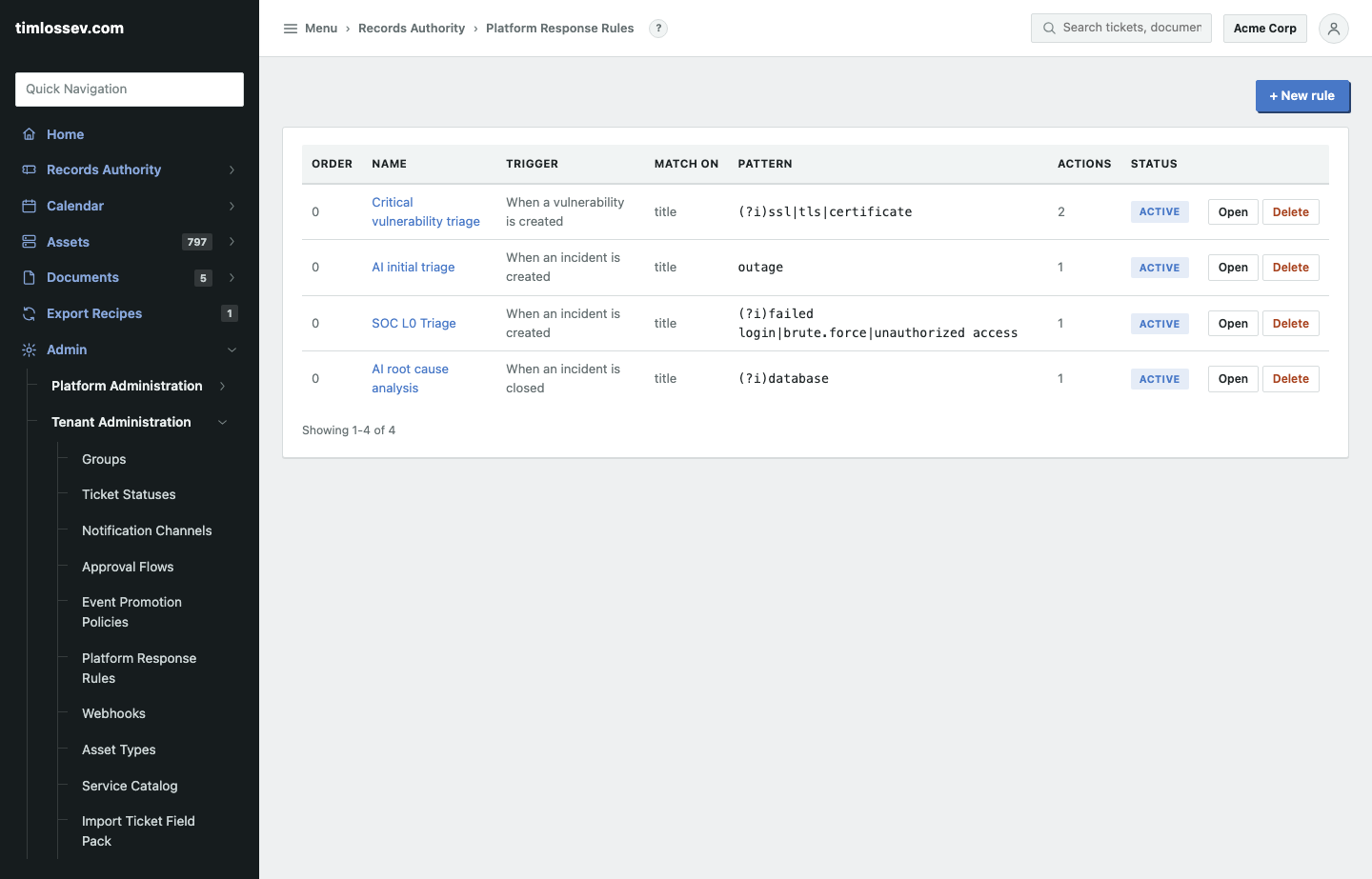
Define automated rule sets to ingest, pattern-match, and promote incoming network telemetry.
View image
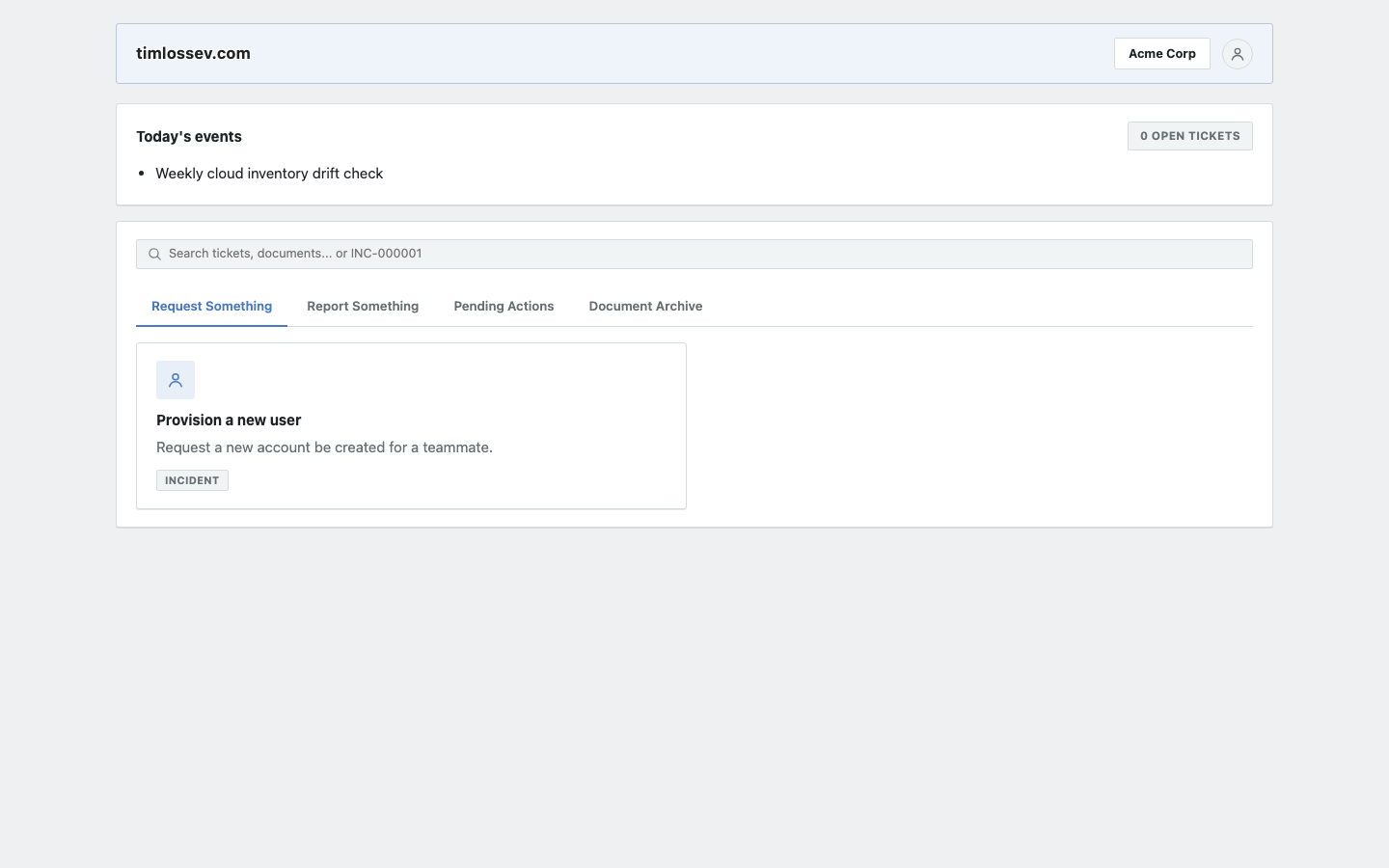
Dedicated stakeholder portal interface featuring scoped ticket access and status widgets.
View imageAsk yourself: do you really need a tank to travel to a corner store, or a purpose-built bike works?
Zero cloud licensing servers, external telemetry, or heavy JavaScript bundles. Runs anywhere with zero internet dependency.
Auditors check operational artifacts rather than policy papers. Turns live changes and events into verifiable audit trails.
Ingests raw Syslog feeds, buffers network signals across segments, and automatically promotes critical signals into tickets.
Built using Python, FastAPI, Jinja2, and vanilla CSS and JS. Simple maintenance without complex supply chain risks.
Customzeable IT Service Management primitives built for high security or isolated environments:
Flexible asset management for direct inventory control instead of rigid CMDB setups.
Lifecycle management for requests, security alerts, and system changes.
Native integration bridge connecting security tools directly to operational response.
Operational scheduling for maintenance windows and routine procedures.
Built-in knowledge base and archive for standard operating procedures.
Built for strict control framework requirements and regulatory environments.
RAIN includes flexible data schema and extension starter templates designed to bridge written security policies with technical operational reality. No coding, simple UI import:
Designed to produce evidence artifacts for major security baselines:
Our documentation and implementation guides
System design, technical stack decisions, and deployment configurations.
Analysis of framework compliance across regulatory baselines.
Workflows for tenant management, event rules, and notifications.
Docker compose files, helm charts, and setup instructions.